Search This Blog

Showing posts with label Uganda. Show all posts

Saturday, 2 January 2016

a light shines in the darkness


Over our Christmas break this year, we spent five days on a trip to Nakivale Refugee Settlement in western Uganda. Needless to say, it was an incredible experience that I believe has deeply impacted both Isaac and myself. I'm sure I will write more about that experience in the future.

While not everything was planned ahead of time, it became clear in advance that we would be expected to speak to some church leaders to give an encouraging word and to clarify our connection to them as fellow Christians. ("Many Africans think whites don't believe in God," we were told. Wonder why???)  I was also told that I may be asked to share some encouragement with Christian women specifically, knowing that many of the women and girls in the camp had been victims of sexual violence.

In the weeks leading up to the trip, I was anxious about these possibilities. Teaching English? Yes, I can do that. But giving a spiritual word of encouragement to a group I don't know, across cultural and language barriers? I kept saying, "Well, I'm not a pastor..."

Deep down, there was an added layer to my insecurity. How can I stand before a group of refugees, people who fled from their homes and in many cases have lost everything? What would they think of this little white girl, so oblivious to true suffering, giving them an encouraging pat on the back? How could they hear the Gospel as they sit in difficult situations that may not change?

In Western culture, one of the greatest arguments against the Gospel is suffering. It's become a trump card in the argument against the existence of a loving God. In the West, a single encounter with loss can shatter a person's faith and send them teetering right off the fence and away from God.

And there in Nakivale ... that whole group would be a testament to the suffering and evil in this world.

It wasn't a conscious thought, but it was an undercurrent in my mind.  Hmm... how do we flex the Gospel to fit this group? How do we face those difficult questions? What angle do you take with such a group?

It sounds a bit silly when I type it out, but the thoughts were there. And those thoughts, I realized, are so misplaced. The Gospel was made for people in suffering.

Yesterday I was flipping through the Bible and landed in the latter part of the Psalms. Not psalms of David, but psalms penned by Jews finding themselves in Babylon. Away from their home countries. No hope of return. They'd lost everything. And then I found another bookmark in Isaiah. Passages about a God who is fiercely angry on behalf of the oppressed, who sides with the suffering and sets himself against the unjust. And then there was another bookmark, a wrinkled church bulletin shoved in the New Testament. Letters from Paul. The author, a persecuted man who eventually lost his head for the sake of the Gospel. The audience, a church well-acquainted with violence and loss of freedom.

And then there's Christmas. The story of a God so grieved by the brokenness, the sin produced by the will of fallen humanity. A God so moved by our suffering that He stepped into it, taking on flesh and knowing poverty and pain and death for our sake, that we might be joined with Him when He returns to make all things right.

The number of people in the Bible who experienced pain, poverty and loss far outweigh those who lived a smooth life, especially in the New Testament. If anything, as someone who has had very few storms in life thus far, I am the outsider. I am the one who doesn't entirely "get it." As a member of a privileged part of the Body of Christ, yes -- we have a responsibility to help in practical ways and to "spend ourselves on behalf of the hungry and oppressed" (Isaiah 58:10). But we do not need to be ashamed to present the Gospel, even if on that day that's all we have with us to give. 

This Christmas my sister's church had the congregation sit in darkness, and then as reader after reader read a different verse about light, a lamp was turned on. Eventually, the room was filled with light. Light shines best in darkness. 

Christianity is not a religion of the prosperous, the privileged. God has been a shield and source to the oppressed for thousands of years. Christ himself is no stranger to suffering. We don't have to twist the Gospel or wonder how it will be received by those in difficult situations -- it was meant for them! Our hope is not fragile, it is not breakable, it is not stumped by the darkness in this world .... It shines fiercely in the midst of it. It cannot be put out.


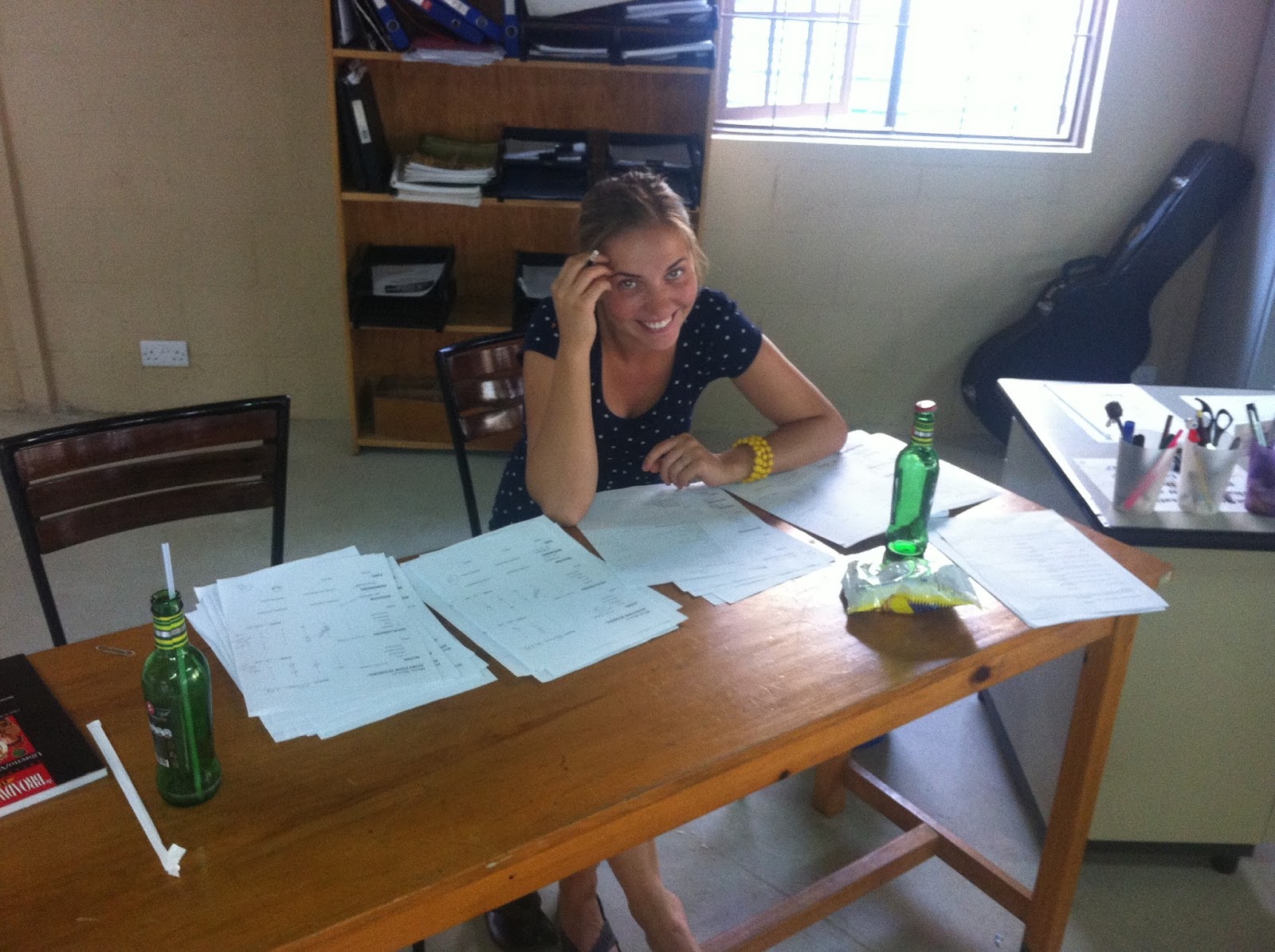
Sunday, 3 May 2015

hats off to missionary moms

During the past two years, I've had the chance to observe an interesting group of people: missionary moms. I realize that they are all different, but there are certain patterns and characteristics that put these women in a league of their own. 

To be honest, I initially found missionary moms to be a scary group. Last year I was a brand new teacher, fresh out of university, and although my parent/teacher interactions were very positive, it was still a source of insecurity. There was a particular brand of parent known to be feisty: missionary moms. You could often expect direct questions, honest impressions, and a distinct feeling that you weren't completely trusted when one of these ladies sat across the table from you. 

But over the past two years, I've grown to admire this group of women. Their husbands are often the ones who inspire a lot of praise -- pilots, doctors, pastors, directors, Bible school professors. (Although, make no mistake, I've met a lot of professional missionary moms, too -- from doctors to reverends.) But behind these men are women who are busy steering the ship of their families, protecting and watching and nurturing. 

The reason I found these moms so scary is the same reason that I admire them: they're a feisty bunch. They don't play games. When they meet a young new teacher, why should they trust them? Their kids have probably had new teachers dozens of times, and they are protective over their children's education. 

There are several moms who have fought to be able to adopt kids and teenagers, and then constantly fight to bring those kids up to speed academically.  

There's a mom who made a commute of one hour every day in horrible Kampala traffic to get her kids to Heritage, because she knew the kids loved the school and that it was good for them to connect with others. 

There are moms who learn how to drive here. Period. (Something I still can't imagine doing.) 

There are moms who camp with their children for several months in the summer while they travel and fundraise for their mission. 

There was a mom who accidentally hit a boda, found her vehicle surrounded by a mob and dozens of boda drivers, who had to lock her doors and pray while driving straight to the police station. 

There are moms who send me messages or meet me in person asking for advice, the concern for their child whose friend has moved or who is preparing to return to the States etched on their faces. Like moms of all teenagers, they sometimes can't get information out of their kids but want to know that they are okay. 

There are moms who drop their kids off at university and then return to their post on the other side of the world, trying to send care packages or arrange a place for them to stay over Easter. 

There are moms who choose to work outside the home, trying to decide on the best child care option in a foreign culture. 

There are moms who choose to stay home with young children, which can be isolating and difficult in one's own country, never mind a new place. 

There's a mom who posted that her husband, a pilot, will be gone on assignment for one month. She wrote that this is "where they shine" -- she loves to hold down the fort while he is away doing ministry! 

For some moms, accepting a particular post means that they need to figure out how to homeschool their children. 

There are moms who run cooking classes or job skills training out of their homes. 

There are plenty of moms who live abroad with special needs children (biological or adopted). They are constantly smoothing out the path for these kids, making sure that they get what they need. 

There are moms who walk to the market and barter for their family's groceries. 

There are many moms who fight the corrupt electricity company tooth and nail! 

There are moms who kill rats, shrieking with terror, while their husbands are away.

There are moms who pack the birthday candles and banners a year in advance, to make sure that their child will have a special day. 

There was a mom who had to comfort her child, watching them have nightmares and anxiety, because of the riots and upheaval they had witnessed during an election. 

There are moms here who have a very strange sense of humor. So-called 'funny' anecdotes include -- "Remember that time we were bathing the boys and little worms popped out of their heads that had been buried in their scalps?" Or -- "One time we were in a village in Tanzania. Two [of seven!] kids were sick, and we had to use a bucket because it wasn't safe to go outside. They were puking and having diarrhea in the same bucket!" 

Every mom seems to know how to cut hair (is that included in missionary training?). 

I've learned that the moms seem to be the ones who know the ins and outs of international medical insurance. 

There are moms here who really know how to stretch a shilling to keep their families healthy and happy.

There are moms who sneak a mini Christmas tree into their luggage to give their kids a small taste of home when the holidays arrive. 

There are moms here who have to explain what Wal-Mart is to their six-year-old, realizing with a start that their child is separated from their own home culture. 

There are moms who have to return to their home country alone, for months at a time, to receive medical treatment for a disease contracted here. 

There are moms who give birth here in Uganda and raise babies far away from friends and family. 


And the stories I hear from the kids! 

"Yes, one time robbers threw poisoned meat over our wall and our dogs died." 

"Once I was bit by a snake." 

"Here's some photos of when we lived in Chad..." And I see the family standing, surrounded by desert, with their daughters who were so ... little. 

When the kids share stories, I have to wonder about how the mother felt who was on the other side of that experience. 

I've come to view missionary moms with admiration, a bit of awe, and a touch of questioning their sanity. Sometimes I find them intimidating, as I don't often see a chink in their armor. If I don't hear it from them, I often hear about their humanity and their struggles from their kids.

"When we first moved here, my mom cried all the time." 

"After we left the last place we lived, and came to Uganda, my mom felt really lonely." 

They are human. They can be lonely or depressed. They battle inner fears, not just external challenges. I can tell by the way some of my students talk that their mother is the strongest presence in their lives, and her ups and downs are the thermometer for the whole family. 

Missionary moms are often accustomed to people walking in and out of their lives. This second year of teaching, I've been able to build on the foundation from last year. I've forged new friendships and, once their trust is earned, I've discovered that missionary moms can be the greatest encouragers. They are beautiful and godly, but they aren't passive or merely "nice." They are strong and tenacious, relentless in the pursuit of their call to missions and their responsibility to their families. 

So ... hats off to missionary moms! 


Friday, 27 March 2015

the exciting life of a missionary

As I scroll through my Facebook timeline and my old blog posts, I realize that my life often looks ... strangely interesting. Now, of course everybody's life looks more interesting on Facebook. When we scroll through newsfeeds, we all forget that every post means someone was hunched over staring at a screen.

Documenting the mundane: *someone* (who will remain nameless)
 cannot seem to get the clothes IN the basket. 
But I live in Uganda, and most of my friends do not. On top of that, we recently became "official PAOC missionaries" when we felt we should stay in Uganda after my husband finished his degree (not the original plan!). So, through Facebook and blogs and newsletters, we do paint a picture of life here for people who are back home. Even more intimidating, we strive to send honest "dispatches from the mission field" to people who now support us as missionaries.

Last summer when we visited Canada, I was caught off guard when a few people asked brightly, "So, how was your trip?"

My... trip?

"Where is your tan?!"

Uh ... I work in a classroom every day. It's really not ... Well, it's not that exciting.

I'm afraid there has been some miscommunication, and I'm afraid that a lot of it is my fault. Pictures of exotic birds and monkeys and landscapes can paint a life full of adventure and non-stop novelty. Photos of ministries or volunteering opportunities, along with moving stories, can -- although honest and accurate -- cause people to think that I feel rewarded every day, tangibly "changing" something, seeing an end result.

So I thought I'd describe an average day of whirlwind missions in an exotic location:

5:50 am: Alarm goes off. Fumble for phone, press snooze as quickly as possible.

6:30 am: Stop pressing snooze, get out of bed. Groan to find a crispy dead cockroach by my feet. Scoop it up with toilet paper, wishing Isaac was not in the village all week long so that he could perform his duty of insect control.

Eat something -- anything -- for breakfast. A muffin, a piece of toast, an apple, or a few scoops of yogurt.

Make coffee or tea, fill thermos. Boil water while brushing teeth as not to waste a precious minute.

Student projects -- Medieval manors! 
7:10 - 7:15: Leave the house. As it's wet season, this usually means throwing sandals in my backpack, putting on rubber boots, a jacket and grabbing an umbrella.

7:30: Arrive at school.

Reviewing auditions and making up the cast list for the school musical. 
Spend the day teaching --  giving devotions, prepping, grading, answering emails, calling parents, meeting with the secondary principal, meeting with my professional learning community of other teachers, meeting with student support services, meeting with parents, attending assemblies, writing report card comments, presenting lessons, giving detentions, planning field trips, creating rubrics, stapling things on a bulletin board, refereeing student arguments over the direction of the fan, etc., etc. Common annoyances include printer not working, photocopier backed up, Internet not working, or power going off.

12:10: Lunch. Once a week, it's my turn to get the lunches for the detention room.  That really breaks up the routine and keeps me on my toes.

More teaching.

Special days at school -- Wacky Day! 
3:00: Bell rings. "Stack your chairs, stack your chairs! See you tomorrow. Sam, did you give me that assignment? Whose bag is this? Hey, whose bag? Bye, having a good night!"

Staff meeting, possibly. Or a rehearsal for the school play. This includes running lines with students, listening to students sing the musical numbers, and giving my opinion on costumes made out of margarine containers, cereal boxes and expert use of a glue gun.

4:45 - 5:30: Grading, prepping for the next day.

Muwala interfering with a Saturday marking session ... 
5:30: Arrive back home. Feed the cat. Eat a patched-together dinner for one while watching a show. Lately, that show has been Call the Midwife, thanks to an understanding friend who sent me several seasons on a flash drive with my parents when they visited. Isaac and I often like to watch funny sitcoms when he's home, a fact that someone back in Canada found very surprising and, well, a little shallow. To be there. In Uganda. Watching TV?.... Sorry to disappoint.

Scrolling through Facebook, Pinterest and blogs ... Reading ... Sometimes grading *yech*

7:30: Turn on water heater.

8:00: Shower.

8:30: Call Isaac. Have deep conversations about paying the water bill and, could you pick up cat food and almond extract on your way home this weekend?

9:00: Lights out, bed. As much as I wish I was a more efficient human being, I need my sleep.

Once a week this routine is disrupted by attending our couples' Bible study (which, ironically, only I attend now as Isaac is in the village all week). This means I'm either going to eat at someone else's house, or hosting 25 people at my house. Sometimes I take a walk in the evening to pick up a few groceries, eyeing stray dogs warily and avoiding getting hit by bodas. About once or twice a week I hang out with one of my friends, either at her place or mine -- and my friends laugh at how I politely kick them out or politely begin to leave promptly around 8. I'm very clear -- I need my sleep. School night bedtime is not negotiable for this teacher.

This is not to complain. This is not to bore you (sorry). I love my job, I love teaching. I love teaching missionary kids and Ugandan kids that I believe will have a great influence in the future. I love supporting missionary families -- MAF pilots, orphanage directors, Bible school professors, church planters. Sometimes I feel a little restless to be out "on the front lines," sometimes I envy Isaac's life in the village (which, let me tell you, is also full of un-exciting hours -- hence his developed obsession with birdwatching), but I really feel that right now I am where God wants me to be. I believe that what I'm doing is building the Kingdom of God.

I'm sure many of you can relate -- whether your calling at the moment is raising kids or cooking at a church camp (why does that one spring to mind, I wonder?) or working at a bank or standing at a cash register or teaching at a college or cleaning people's teeth or setting up chairs before youth group. There's always the hum-drum of daily life, the mundane tasks that no one includes in a newsletter.

And it's the same over here, across the ocean in Uganda.


But sometimes the day-to-day is where I find the sweetest gems <3 


Tuesday, 24 March 2015

wounded

When I was in high school, I found a book called something along the lines of Twenty Things Every Christian Should Read. The book had excerpts from 20 great Christian thinkers -- an efficient way to pretend you had read more than you had. I bought the book, and read from Luther and Calvin and Lewis in bite-size pieces. But one excerpt that has stuck with me was by Julian of Norwich. I can't remember it very clearly, and I don't have the book here in Uganda to refer to, but I remember the powerful phrase -- she asked the Lord for "the wound of compassion."

A wound?

I'm slowly realizing how accurate the metaphor is. Compassion isn't a warm and fuzzy feeling. It's a wound, painful and bleeding. It's taking up a problem that isn't yours, attaching yourself to someone else's situation, allowing your own heart to be broken. I've seen compassion lead privileged people to fight for orphans in babies' homes. I've seen healthy people be driven to visit those in hospital. I've thought of my grandmother, recently deceased, who could have kept herself in a warm Christian cocoon but instead reached out to immigrants and inner-city kids. And the ultimate example: compassion drove Christ to the cross on our behalf, to reconcile us to God.

Last week, I met people who have tied themselves to one of the most heartbreaking causes I've seen yet in this country. Along with two friends, I accompanied the team at Sixty Feet on a visit to a children's prison outside of Kampala.

Children's prisons? What does that even mean? The first time I heard the term was a few months after arriving in Uganda in 2013. One of my students, it turned out, had actually been in one. The student had been picked up and loved by Sixty Feet, a Christian organization that reaches these kids who are literally locked up and forgotten. Ever since then I had wanted "to see" what a children's prison was, and what Sixty Feet was all about.

A children's prison houses, of course, convicted criminals who are under 18 years old. A few are 19 or 20, if their sentence slightly spilled over into adulthood. But there are more than just convicted criminals there. Child beggars, often from northern Uganda, are often picked up and dumped in these prisons when city officials "clean up" the streets. Sometimes kids who are hard to handle are also abandoned here.

I can't tell you the history of children's prisons. I can't explain in detail how they function. I don't understand why some of the kids from the north -- even ones whose families have been contacted by Sixty Feet -- can't legally be resettled or put in foster homes.

What I can tell you is what I saw in one afternoon. I'm sorry to readers who work in children's prisons and may shake their head at my limited understanding or possible misconceptions. I'm not qualified to explain the topic, but for many Canadian friends I've had an experience that is not possible for them. So all I can do is share my experience.

I saw very few adults. It was a little like Lord of the Flies. The only adult that is on the premises to care for the younger children (kids as young as 2 years old get dumped here) is someone that Sixty Feet actually hired. When I asked two boys if the kids are kind to each other, they laughed and said no. I can't imagine the pecking order in such a place, with no adults to curb the cruelty of troubled kids and teens.

I saw the dining area crowded with kids, singing and drumming with the visitors. I saw the Sixty Feet team, along with another visiting missionary, preach to the children in Luganda and in English. I saw peeling posters on the walls with Bible verses about the love of God. I saw a young man in prison give his testimony with thanksgiving and joy.

I saw the younger children curl up and fall asleep during the informal service. Different little girls grabbed at my hands, and I had the distinct feeling that I was being "claimed" by them. I sat with one little girl on a bench, her head in my lap, and she fell fast asleep. I tickled her arm gently, remembering how my mother used to do that for me, angry that she doesn't have a mother around to protect her.

I saw a little boy watch me with the girl on my lap. He tugged on my friend's hand and, without using any words, clearly communicated that he wanted her to do the same for him. Why did they fall asleep, I wondered, seeing another little one fast asleep on the back of a Sixty Feet worker. No bed time? Do they feel safe with us, safe enough to let their guard down and sleep?

I saw boys with shining black backs, no shirts on. "The ones with no shirts signify that they are new kids picked up off the street. Keeping them with no shirts on lets them be easily identified as being new, and they sleep in a separate area," I heard.

I saw that the majority of the older kids were boys. Many looked hardened and tough. And I looked at the little girls and I wondered what that meant for them.

I saw the area where the girls sleep. Few beds, all of them taken by bigger girls. "The kids here aren't kind to the small ones, they take the beds." And the little girls sleep in a huge room on cold concrete. I saw chickens on the beds, clucking and pecking at the pathetic mattresses. I saw chicken and goat feces smeared on the floor. Apparently, Compassion donated 300 mattresses last December. I didn't see one -- they have disappeared. I stood on the concrete, frantically calculating how many bunk beds we could fit in our spare room at home, but being told that these small kids from the north can't be resettled with families or put in foster homes even if they were available. A frustrated desire to keep these little girls safe when they lie down to sleep.

I saw the area where the boys sleep. More beds than the girls have, rooms divided based on hierarchy and seniority and punishment. I saw the solitary confinement cell, where new kids are sometimes put and runaways are beaten.

I didn't see love or care, or anyone protecting that little girl I carried who was so painfully thin, wrists like a little bird's. The only ones asking questions, knowing the kids by name, feeling frustration on their behalf were the Sixty Feet workers.

Afterward I went out for burgers with my two friends. Trying to process the day. But the reality didn't swell up and burst in me until later, crying hot tears and feeling angry and broken and powerless.

I didn't see any clear solutions. I didn't see a 1-2-3 step plan I could do.

The only avenues I can think of?

Check out Sixty Feet. Check out Emily Ryan's blog, one of the social workers for the organization who is bringing Christ into that prison.

Raise awareness. Read and question and feel pain and look at the photos my friend took while there.

Pray.

Whether it's about this or another issue God has placed on your heart, it's a worthwhile question to ask: Are we willing to be wounded?
An ironic sign in the boys' area.

The girls' sleeping room.

Chickens on one of the beds in the girls' quarters.


Isolation cell. 

Dining area. 

Kids praying during the service led by Sixty Feet volunteers.

My friend Sarah with one of the newly arrived boys. 

Where the little girls sleep ...  

Boys' sleeping area. 


Tuesday, 16 December 2014

a poem - maybe i need africa

On the way back to Uganda last August, we had a terrible time! Roadblocks and headaches at every turn. We got on the plane in Toronto not knowing if we would be approved for missionary status with the PAOC, not knowing if any opportunity would come up for Isaac. The numbers didn't add up, "the plan" didn't seem to make complete sense. I wrote a few poems as we crossed the Atlantic, and here is one of them. I feel like I'm in that place again, always trying to talk to God about things that I'm focused on -- money, security, health -- and He just quietly draws me to Himself. He doesn't tell me what to do, or give the answers I'm looking for, but makes me crack open my Bible instead or become reliant on regular time in prayer. And I think maybe I miss the main point, and maybe the point is getting to a place of dependence on Him. 

The verse above my mirror right now: "I have set the Lord always before me. I will not be shaken, for He is right beside me." Psalm 16:8 

*Just a note: If you are African, and resent Africa being represented only as a place of trial, I'm sorry. If you are not in Africa, and think that it's only about Africa, you're wrong. Right now, and especially on that plane ride, Africa represented where we felt called to be, the unknown, and potential difficulties. Your Africa may look totally different than mine. 

Maybe I Need Africa
Maybe
I need Africa
More than she needs me.
Maybe
The ones who stay behind
Are stronger.
Maybe
You call the weaker ones 
To a path that’s longer.
Maybe
Picket fences would strangle me
Maybe
Money would quench me.
Maybe
Predictability would lure me off my knees.
Maybe
This stretching, these changes

Save me.

I’m prone to wander, Lord,
I feel it. 
Maybe
Struggles will be the fetter
Maybe
Africa makes me better.
Hot sun searing off the fat
Savannah breezes blowing away the chaff

Maybe
My prayers shouldn't be about money, health
-- Even security
Maybe
The point is to bind

My wandering heart to Thee.

Saturday, 13 December 2014

my turn to learn

Sometimes little moments appear that encourage you, moments you almost walked by or missed altogether.

I have been volunteering at a refugee center every Friday since September. I leave school, go home and plan a basic lesson outline, hop on a boda and arrive at the center to have class from 5 to 7. There's usually about 8 or 10 Congolese men there, although there is one spunky older lady named Charlotte as well. Almost all young men, almost all unemployed. Trying to learn English to navigate life in Uganda, trying to build dreams on the sand that is shifting politics, shifting statuses, and a staggering unemployment rate.

Tonight was our last class. I didn't realize, but the Heritage middle school youth group Christmas dinner was the same night. I had had to cancel the English class the week before so that I could help with the Heritage Christmas concert, so I really did not want to cancel again. I decided to go teach English, figuring I'd return in time to catch the end of the Christmas dinner event. I hopped on a boda and arrived, as usual, shortly before 5pm.

Somewhere along the way, communication must have gone wrong due to the previous week being cancelled. One student showed up: Jacques, a young Congolese guy who arrived in Uganda last January.

I sat down, ate the apple I had grabbed as my dinner, waited. Chatted with Jacques, who was a little quieter than usual. I asked if something was wrong, but he said it was just the fact that he was still recovering from malaria.

I didn't say anything more, but I had sensed his optimism beginning to wane over the last few weeks. Jacques has such a great attitude. He shows up on time for every English class. Every week he sets up the board and markers for me, every week he wipes down the board and puts everything away for me, jumps up to tuck in all the chairs. He's trying to develop himself, trying to find some way to make himself marketable. He's working at his English in my class and in another class during the day. He's teaching himself guitar. He took a baking class at the center where he learned how to bake cakes and muffins. He took a business class. He took a class on social media and computer literacy. A few weeks ago he had a book he had gotten from a friend of his who is moving to Canada, a book preparing refugees to move there, providing information about cultural norms and logistics. He was devouring the book, quizzing me about Canadian culture.

Like every other man who attends the class, Jacques can probably only fantasize about getting a visa to Canada or the US. A few weeks ago Mbale, another student, was telling me about a lottery he had entered to try to get an American visa. (After a quick Google search it appears that this is a real thing - the Diversity Visa Lottery) He was nervously excited about the chance of getting the visa, but didn't say anything the next week when he had not been selected. And I sit, little white girl across the table, with an iPhone in my bag and a million opportunities, not because I am smarter or more hard-working. Just because I was born a Canadian citizen, rather than being born a black African in beautiful, war-torn Congo.

To be honest, I was a little annoyed as the minutes ticked by to almost 5:30. I am volunteering my precious time, I could have been at the middle school Christmas dinner, and only one guy is here. We went over some English questions Jacques had, and then just as I was about to say, "Well, then, Merry Christmas, I guess I'll get going" another Congolese refugee, Pauline, who happened to be hanging around the center joined in and the three of us started talking.

I've never met Pauline before, so we exchanged the usual questions. Turns out he's a French teacher at an international school, and so he and Jacques enjoyed helping me with my pathetic French. Then he asked in French if I was a Christian, and I answered that I was.

We laughed about the difference between Congolese and mzungu churches, how mzungus only dance with their necks and jump around. I told them that when I went to the Congolese church I actually wondered if the children in the congregation had practiced their dancing during the week! Turns out Pauline and Jacques are both big fans of Hillsong, and Pauline started strumming a Hillsong song on the guitar while Jacques tapped a beat on the table.

Then Pauline played a song he had written, closing his eyes and singing in French. He told me that the words were about finding consolation in the Bible, and how if he serves the Lord he will never be -- what's the English word -- embarrassed?

Over the past few months I've never asked my students a whole lot about their pasts, but the conversation opened up about how they ended up in Kampala. How Pauline had thought his whole family was dead, saw no hope at the end of the tunnel -- and then last year heard that 9 family members had arrived at a refugee camp and aid workers had connected them. They talked about what life is like in a refugee camp, and how even though all your needs are met life is still difficult. Both would rather be working in the city, providing for themselves and having more freedom.

He got a far away look in his eye that I'd seen before when talking to refugees, a quick flash of pain and vivid memories. "They say my mother and sister were kidnapped, they do not know where they are," he said calmly. "I believe and I pray that one day I will also see them again."

I was amazed at Pauline's joy and spirit of thankfulness. "A year ago, I could not see any hope. But I have found hope in God. And I thank God that I found the job as a French teacher -- I didn't even know any English at the time! -- and now I can live and work, and I am able to feed my family. God has been very good."

Jacques practicing the guitar at the refugee center
We talked about how God can bless us, but how even when bad things happen it doesn't mean God's love has been pulled out from under us. We live in a broken world tainted by sin, and Christmas is a remembrance of God's response to our suffering -- He entered into it and experience it alongside of us and made a way for us to have eternal hope.

On the boda ride home I enjoyed the cool evening air. Kerosene lamps were winking against the darkness, chapatti stands and chip vendors and pedestrians were crowding the sides of the road. I thought about Jacques and the other men, and wished I had jobs I could give them. I thought about my own foolish anxiety, tossing and turning and worrying, when I have had such a good life. I thought about Pauline's smile and glow of joy, about the unique beauty found in faith that has sprung from such hardship.

This morning in my devotions I read Acts 2:28, quoting the Psalms: "You have shown me the way of life, and You will fill me with the joy of your presence."

I need to learn from Pauline. I need to find my joy in the presence of God, just spend time and rest in His love, knowing that nothing can separate me from it.  And I thanked God for my conversation with Jacques and Pauline, for a moment that I had almost missed.

Sunday, 9 November 2014

two announcements

We have two important updates to share!

Thing 1: Isaac has accepted an offer to be the new Field Director of ICEF Canada operations here in Uganda. 

This is a full-time volunteer position and a one-year commitment, meaning we are now committed to Uganda until January 2016. ICEF (International Community Empowerment Foundation) Canada is a Canadian NGO that works alongside the Tekera Resource Centre in Tekera village, a little over two hours away from Kampala. The resource centre has many different programs that serve the rural community around it. These programs include agricultural development, a primary school, work programs, adult education, and improving access to clean drinking water. As Field Director, Isaac will be working alongside a Ugandan Program Coordinator and communicating with the Canadian office.

I will continue to teach at Heritage International School; Isaac will return to Kampala on weekends, and I will be able to join him on school holidays. Even though this means time apart, this is an exciting opportunity for him to build his experience in hands-on development work. ICEF Canada's approach to development resonates with Isaac; they are committed to the long-term, they have the goal of becoming sustainable, they want to empower Ugandans as leaders, and they try to have a "hand up" rather than a "hand out" approach. This is an opportunity for Isaac to be "salt and light," showing the love of God through his character as a leader and through the humanitarian work he will be doing.

You can learn more about ICEF Canada at their website: http://icefcanada.org/ 

Thing 2: We are now PAOC (Pentecostal Assemblies of Canada) missionaries.

Teaching at Heritage International School 
Last year (August 2013) we moved to Uganda with the primary purpose of Isaac completing his degree in International Development through an exchange program with his Canadian university. I accepted a position at Heritage International School, a school founded to serve missionary children so that their families don't have to choose between boarding school or leaving the field.

As the year went on, I became increasingly committed to the vision of Heritage to provide sound academics from a Christian perspective. Even though I sometimes don't feel like I am on "the front lines," I have kids in my classes whose parents are planting churches, resettling orphans, running discipleship classes, or training Ugandan pastors. A major reason their families are able to stay in Uganda is because Hertiage exists. I also have a percentage of kids in my classes who are middle or upper class Ugandan, whose parents wanted either a Christian education, or an education based on American curriculum. These Ugandan children will very likely be future leaders in this country, and a chance to disciple them is truly a chance to influence the direction of the nation.

 Even though Isaac's exchange program ended last spring, we felt that we should stay in Uganda longer, and I committed to another year of teaching at Heritage. The main problem we were up against was financial. It is one thing to survive here financially for one year; it is another to think about two years or more and what it means to be sustainable here. Heritage can provide a small monthly salary, but it is not enough to cover all of our costs. We turned to the PAOC, the denomination we both grew up in, and found that "Teacher at Heritage International School" was already listed as one of their international missions opportunities! We pursued a connection with the PAOC, and in September we were officially approved as PAOC missionaries.

This means a few things;

1. We have a channel for people to support us and receive a Canadian charitable tax receipt.
2. We have the network of the PAOC. We suddenly feel much more supported in prayer, resources, advice and more. In April, for example, we'll have the chance to attend the PAOC regional retreat and meet with other PAOC missionaries in East Africa.
3. We can think about longer term missionary service, and be open to God's calling if He wants us to stay in Uganda or serve elsewhere in a missions capacity.
4. Besides being financially able to continue teaching at Heritage (rather than pursue jobs elsewhere), this increases our potential to be able to give to other ministries around us or engage in other volunteer opportunities.

If you'd like to check out our profile through the PAOC International Missions site, you can find it here: https://paoc.org/donate/EricaShelley

We will try to keep it updated with what we're doing and prayer requests we have.  We appreciate prayers and support! The whole "fundraising" thing is very new to us, and in some ways it is very humbling. We hope that people will not give because they know us, or feel obligated. If people believe that what we're doing is meaningful, and is building the Kingdom of God, and if people want to come alongside that, then this is a way for them to contribute.

Please keep us in your prayers, resting in the knowledge that this is God's work, not ours, and if it's His will He will make it happen.

If you would like to "stay in the loop" with what we are doing and current prayer requests, email me at erica.shelley@paoc.org (or let me know some other way!) to receive a bimonthly newsletter straight to your inbox.

Wednesday, 29 October 2014

hatching into a cherubim


As a kid, I devoured a collection of books called The Heroes of the Faith series. These were my first biographies of Christian heroes like Martin Luther, Mary Slessor, George Muller and Jim Elliott. One of my favourite biographies, which quickly became creased from reading it over and over, was the story of Amy Carmichael.

When Amy arrived "on the mission field," she was disappointed by herself and by the missionaries she found there. Surprisingly, they were all fully human -- broken and bickering amongst themselves.

"Wings are an illusive fallacy," she wrote. "Some may possess them, but they are not very visible, and as for me, there isn't the least sign of a feather. Don't imagine that by crossing the sea and landing on a foreign shore and learning a foreign lingo you 'burst the bonds of outer sin and hatch yourself into a cherubim."

The first time I went to Africa, in 2009, I expected a spiritual growth spurt. I expected to hatch into a cherubim, I suppose. Everyone, it seemed, that went abroad came back with a deepened intimacy with God. I was not ready when Africa shook my faith, when I saw church corruption and power struggles and prosperity gospel and wondered firsthand, "Is this my Christianity? Do I really want to be a part of this?" I was not prepared to have to hear the words from a godly Ghanaian pastor, who somehow seemed to have laser vision into my soul: "Erica, even if the name of Christian is soiled, you cannot afford to lose your own salvation because you are looking at hypocrites." I had expected to solemnly lead people to salvation, not be told I was at risk of losing my own.

Amy Carmichael's words come back to me now, as we are in the thick of our second year in Uganda. Sometimes it feels like my weaknesses are only magnified here, not overcome. As time passes in our close-knit community, as we peel back the layers and really get to know other missionaries here, we see their flaws, too. We see addictions and struggles and tendencies that they have fought for so long. We hear more details of their pasts being shared, and the different baggage that each of us carries. We pray together, we confess to each other, sometimes we cry together.

Sometimes we get depressed, weary, angry that our struggles have not yet been sealed with victory.

Today in chapel we were singing the song "Rising Sun," and the lyrics suddenly washed over me.

Praise Him all you sinners,
Sing, oh sing, you weary ... 
We lift high His glory 
Shown throughout our stories 
Praise Him all you children of God. 

Our great Redeemer
Glorious Savior 
Your Name is higher than the rising sun
Light of the morning 
You shine forever
Your name is higher than the rising sun. 

The glowing purity and goodness of God hit me all over again. He is higher than the rising sun? He is majestic and beautiful and he bothers with dusty, weary sinners? His glory is revealed in our stories?

And I realized all over again that God is not good in spite of the fact that His children mess up. He is not pure in spite of the fact that we still sin. He is not faithful in spite of the fact that we stray. Our witness is not effective in spite of the fact that we are broken. His goodness is unparalled, His purity untaintable, His faithfulness incomprehensible, our witness unarguable because of our sin, our brokeness, our weakness. What a God that can use hurting people riddled with issues, even to be missionaries, pastors, teachers, youth leaders! You cannot capture the depth of grace unless you juxtaposition who you are -- who you really are -- against who God is.

And the phrase that keeps being burned into me, spearing my pride: His strength is made perfect in my weakness.

When this girl, who has wrestled anxiety over and over again, can hear about planned terror attacks and honestly say to people that I don't worry, that there has been a gift of peace I don't understand and can't explain and -- you know, you know this isn't me. You know that I've struggled. You know this is God.

His strength is made perfect in my weakness.

When I want to pretend that I'm perfect and mask any doubts. When I think that being a "good Christian" is to hide your issues from unbelievers.

His strength is made perfect in my weakness.

Maybe we can only lift up His glory if we risk ourselves, step out, and tell our stories.


There's a wideness in God's mercy
I cannot find in my own
And He keeps His fire burning
To melt this heart of stone
Keeps me aching with a yearning
Keeps me glad to have been caught
In the reckless raging fury 
That they call the love of God. 

- Rich Mullins (a guy who wrestled with alcoholism and depression, among other things...)


Wednesday, 8 October 2014

seeing things the second time around

In grade 6 English we're reading Hatchet by Gary Paulsen. In the novel, a young boy named Brian Robeson gets stranded in the Canadian wilderness when a bush plane flight goes wrong -- the pilot dies of a heart attack and Brian has to crash the plane into a lake. Brian has to learn how to survive with only his hatchet and the world around him.

Today in class we read Chapter 5, the part in the book where Brian, after the crash, has just come to his senses enough to stop and look at his surroundings. He sees only a blur of blue and green -- trees and sky and water. He notices a beaver lodge and the general chirping of birds, but little else. Compared to his life in the city, it seems that there is only empty silence in the woods. With hunger stabbing at him, he looks for something to eat but concludes that there is nothing. Nothing. Only brush and rock and trees and water.

By the end of Hatchet, Brian has become a part of the woods. He can differentiate between different birds, find edible plants, wake up from the slightest sounds in the night, sense the presence of animals, and predict changes in weather.

After reading the passage, I told the students to watch for the changes we will see in Brian, and as I was talking it hit me how much Brian's transformation reflects some of the adjustments I've made in Uganda.

When we first arrived over one year ago, I didn't see very much. Everything was a blur of dirt roads and sloping shacks and bodas and taxis. It sounds ridiculous, but the couple who oriented us actually had to teach us how to remember where we lived.

"Everything will look the same to you," I remember Bill saying, standing there in his khaki shorts and T-shirt, looking infinitely more comfortable on Ggaba road than us newcomers felt. "Look for those two billboards, then you'll know that's your road. Remember you live in Kansanga, past Kabalagala."

It sounds embarrassing, but for the longest time I had a hard time remembering people. The guards from the school all looked the same to me -- black men wearing the same uniform and sporting the same haircut. When our Heritage night guard would arrive in the growing darkness of evening, I would often greet them with a smile, ask how they were doing, and then turn and hiss under my breath to Isaac, "Who is that again?"

I also had a hard time with Ugandan women. I realized that my brain had learned to tell people apart by their hair. As soon as I "remembered" a Ugandan woman by her hair, she'd changed it! Tight braids could turn to shiny waves overnight. When people talked about the physical features of different tribes, I was at a total loss.

[ I should note that I am not very observant to begin with (I would make the worst witness at a crime scene). I should also note that a few weeks ago a Congolese French teacher at Heritage confessed that he got me confused with one of the American teachers for the entire school year last year. He pretty much only saw blond hair. (So I'm not the only one who struggles!) ]

When we first moved here, I got a little irritated with people saying things like, "Listen to your gut. Don't get in the taxi if it feels wrong. Use common sense."

Use common sense? I had no common sense. Getting on a boda with a strange man wearing no helmet felt wrong. Getting in an unmarked car that I was told was a private hire felt wrong. Hearing strange noises at night felt wrong. Sticking a pen in a socket to make the plug fit felt wrong. It seemed that I was constantly suppressing my gut feelings.

This year, I realize how far I've come. I don't see a row of shacks strung along a dirt road; I see a chapatti stand, a seamstress, or the place that always has good cucumbers. I look at the same Heritage guards I was confused by last year and see completely different features, shaking my head and wondering how I ever confused them. I notice that a sign has changed or a new place that sells cell phone credit has gone up. Noises in the night are no longer unnamed; I can hear Molly crying, or the Muslim call to prayer, or the ice cream man bicycling by, or the neighbour's gate opening, or a Luganda radio station playing the football match. I don't think that every day is "the same" and that the weather never changes; I find myself saying things like, "It's a bit chilly this morning." (Oh no -- what will happen when I go back to Canada?)

Slowly, I'm also gaining a bit of a "gut feeling" that I can count on, to help me sense potential danger or alert me to any changes.

Power outages? Normal. 
Random man hitting on me? Normal. Random man who gives me a totally different "gut feeling" and causes me to cross the road? Not normal. Getting in a taxi? Normal. Getting in an empty taxi? Not normal. Kids openly using the word "beaten" to describe the discipline at home? Normal. The kid next door regularly screaming for extended periods of time? Not normal. People staring for what I deem to be awkward lengths of time? Normal. Kids in ragged clothing and bare feet? Normal. Thin man in rubber boots herding cattle (with humongous horns!) in front of my gate? Normal.  Kids running up and talking to me, a stranger, and grabbing my hand? Normal. The power going out for a day? Normal. The power going out for a week? Something to talk about. Giving money to a young woman begging on the streets of Kampala? Not appropriate. Giving money to a guard who you've known for over a year when his house burned down? Appropriate.


Hail storms? Not normal. 

Using squatties on a road trip (BYOTP)? Normal. 

Cramming in a taxi and suppressing all feelings of claustrophobia? Normal. 

Even though I can sit back and realize how much more I see here, how much knowledge I've gained, I know that it's a learning curve that I've hardly mastered. Maybe that's why a part of me loves living in Uganda -- it's always interesting, and there's always more layers to learn.

Once any other kids outside of another little shop, now our friends Winnie, Flo and Comfort. 

Tuesday, 2 September 2014

isaac gives an update

Getting fresh fish out of Lake Victoria at the Ggaba fish market! 


A guest post from Isaac, stolen from his unusually long Facebook status:

I have not posted too much since returning to Uganda almost a month ago so here is a quick bulleted summary on some events that have transpired to keep everyone who cares up to date.
- Since missing our flight in London and having some immigration issues, we are completely settled into a routine in Kampala and I am officially under a dependency visa as a stay-at-home-almost-retired-but-actually-unemployed-husband.
- Three appliances, a coffee maker and rice cooker brought from Canada and a Ugandan kettle fried within 5 days of arrival.
- Our cat Muwala is alive and well and is appearing to gain a lot of weight since our return. Our dog Wally continues to be kind of dumb but still very loving and needy for belly rubs.
- Erica and I celebrated our 4 year anniversary.
- Erica is back teaching middle school English and Social Studies and volunteers at the end of the week to teach English to Congolese Refugees.
- My own involvement with a local organization serving to help Congolese Refugees. Details are currently in the works.
- Experienced a hail storm like no other (the worst I have ever been in) despite literally living on the equator.
- I have taken the duties of head coach of the U16 Boys soccer team at
Heritage and assisting with the Open Boys team.
- I severely sprained my right ankle playing Soccer over two weeks ago and continue to feel the pain but refuse to sit on the sidelines during any sporting activity.
- Went undefeated in the monthly Vanderford Invitational Table Tennis Tournament.
- Unfortunately, I am currently in the process of voluntary release from the Canadian Military due to living in Uganda and the uncertainty of where and when we will end up again in Canada.
- My moustache has appeared to connect with my Goatee. Very exciting.
- Overall, Erica and I are finding our schedules becoming very full and keeping us busy throughout the week with the school activities, social events, friends, and good neighbours all around.
Muwala supervising Erica's weekend grading sessions. 
Isaac's sprained ankle. 
Tiffany and Agnes making a snowman (ice man?) after the crazy hailstorm. While the snowman was fun, unfortunately the storm did a lot of damage to the homes of many Ugandans living in poverty. 

Saturday, 16 August 2014

update: uganda round two

In the midst of the rainy season, the first few days back in Uganda felt cooler than the weather we had left in Canada!
It's been awhile since my last blog post. We had a great summer back home in Canada! Isaac worked quite a bit, and somehow I had a relaxing summer that was at the same time very full. Of course there's always things that you think you'll have time for, that you actually don't, but all in all we were pretty happy with how the summer went.

Flooding on the way tot the airport in Toronto.
On August 4 we boarded the plane back to Uganda. From start to finish, it was one heck of a journey. Driving to the airport, the highway was flooded. Upon arrival we were told that we needed to purchase round trip tickets before British Airways would allow us to get on our flight. Baggage was shoved around, trying to meet the weight requirements. Somewhere amidst the stress we had the emotional good-bye to our parents (except Isaac's dad, who couldn't be there). In London we missed our connecting flight by minutes and had to re-book a Kenya Airways flights for that evening. And then, upon arrival, Isaac had issues at the Ugandan border with his visa due to a paperwork error last year on his student visa. (I was standing in the luggage area peering in through the glass, wondering what I would do if they didn't let him in the country!)

Finally ... we arrived back home! We were exhausted and battered by doubts about why we had committed to a second year. Within minutes of arriving we were welcomed by our friends and pets, and suddenly we remembered how Kampala came to feel like home. Many of us are returning teachers, and last year at this time we were just trying to survive and figure things out. This year we settled in easily on the practical level. On another level, many of us had done a lot of thinking over the summer and we found ourselves in deeper discussions about how to live for Christ in Uganda, how to truly make a difference -- even if that means asking yourself some hard questions.

Teacher orientation started the day after we arrived, and we got to connect with old teachers and meet some of the new staff as well. School kicked off on the 14th, and all of a sudden here we are back in the swing of things. I have a new crop of grade 6 students, who right now look like deer caught in headlights, and have had to say good-bye to my old grade 8 class as they've moved on to high school. Working at an international school with many missionary children, there's always some change in the students -- a few familiar faces disappear, a few new students come in. And, of course, being a middle school teacher, there are some students who have changed so much over the summer that they seem like new students!

Some things that are different about our lives this year:

1. Isaac is no longer in school. He's finished his degree in International Development! Yay! Now he's on the market for jobs/internships.

2. Our neighbours have switched. The Reynolds, with their small son, no longer live on the other side of the duplex -- now they're in the house next door. Our friends Jander and Tiffany -- fellow Canadians -- are now living in the duplex with us. We're looking forward to a great year in "the tripod," as we call our 3 housing units, because we all get along very well. We've started a garden on our compound, dug compost holes, and hope to get a chicken coop soon so that all three couples can have fresh eggs with yellow yolks (for some reason the eggs here have white, tasteless yolks).

3. Ms. Eunice, our day guard last year, is no longer with us -- but she is still nearby, at the house next door! This year Ms. Agnes is our day guard and she is actually going to live on the compound. She has a two-year-old daughter named Molly, who often wanders in and out of our house. She is adorable and enjoys controlling the dogs -- today she was pulling Wally by the ear! I was very impressed that he didn't fuss at all, just walked obediently beside her.

We've only been back for a week and a half, but Canada already feels like a world away. We have no idea what the future holds for us, so we are thankful to have had such a long visit home.

Isaac giving Wally a bath, which Molly found quite entertaining! 


\